I grew up in the small East Yorkshire village of Keyingham, where my dad ran the village post office. I feel greatly blessed that the vast majority of my childhood memories are positive. One not so positive memory, however, is my first day at school: I cried all the way there! Having spent 4 or 5 blissfully happy years at home, I didn't fancy going to this strange, alien place called school. As it happened, I soon settled into the routine of life in the local village school and made some good friends. It was only a small school, and over a period I became very comfortable with school life.
The time came, of course, to leave my village school and move to "the big school" at Withernsea. As an eleven-year-old (still in short trousers!), arriving Withernsea High School was a massive shock to the system. It seemed such a large school, so confusing and not a little frightening. From being a relatively big fish in the village school 'pool' I suddenly became a very tiny fish in a huge new school pool. Once again, however, I gradually got used to the routine of life in the big school (in the event, my time there lasted only just over 3 years, but that's another story).
One of the experiences which life in the new school brought was swimming lessons. For a period of time we were marched each week down to the local open air swimming pool, where a teacher attempted to teach us the art of swimming. Perhaps the water temperature got to me, but I never did become a confident swimmer. Even now, I have little self-confidence when I find myself out of my depth in water, and much prefer to be near the sides of a swimming pool!
I suppose this train of thought arose because I was pondering recently how often during my years as a Methodist Minister I have felt myself 'out of my depth' in a metaphorical sense. Next year will see the 25th anniversary of the year when I left theological college and began life as a Methodist Minister, but that 'I'm out of my depth' feeling is something which I still regularly experience. There is absolutely no way I could undertake this role using my human abilities alone. There have been many times, over the years, when I have felt totally unable, in my own strength, to fulfil my calling.
I am comforted by some words which St Paul wrote, when he relates what he felt God say to him when Paul was struggling: 'My power works best in weakness' (2 Corinthians 12:9). It is often only when we accept that our human strength is not enough that we realise how much we need God's power and presence. Another encouraging verse from the Bible comes in Isaiah 43:2, when God says, 'When you pass through the waters, I will be with you.'
It is my experience that if we make the decision to follow Jesus, there will be many times when he calls us to take steps of faith, to go into deep waters, to experience that feeling of being out of our depth and beyond our own capabilities. If we are willing to take those steps of faith, we find that God is faithful to help us and be with us. There is a part of me which longs for a more comfortable life, one in which the tasks I face are well within my capabilities. But I know that if I chose that kind of life I would miss out on God's plans and purposes for me. As John Ortberg said in his great book, "If You Want To Walk On Water, You've Got To Get Out Of the Boat." The deep end may not be the most comfortable place to be, but it's certainly the most exciting!
Monday, 13 October 2014
Monday, 6 October 2014
Good News is for Sharing!
Former TV newsreader Martin Lewis caused a certain amount of controversy a few years ago when he stated his belief that television should feature more "good news." There can be little argument that our TV news bulletins seem to be focused on "bad news" stories. A glance at today's BBC online news page, for example, includes stories about the advance of ISIS in Syria, a murder trial in South Africa, politicians criticising one another, stormy weather hitting power supplies, and a well know personality suffering from cancer. All-in-all, not exactly uplifting!
In the midst of this plethora of negative news stories, which can become depressing, to hear good news stories can be immensely encouraging and can lift our spirits. Most of us love good news: a birth in the family, a successful job application, an examination passed, a marriage proposal accepted, a really enjoyable holiday - the list could go on. And when good news comes across our path, our first instinct is to share it! It's a natural response. Yet there seems to be an exception, at least amongst Christians.
There are a number of English translations of the Bible. One of the more recent translations is The Good News Bible. What a great title! Mark's gospel begins with these words, 'The beginning of the good news about Jesus the Messiah, the Son of God.' The story of Jesus is the best good news story ever! Indeed, the whole Bible is the story of God's amazing love for human beings, and how, despite our continual rebellion against God's ways, he still pours out his love on us. John puts it like this in his gospel:
'God loved the world so much that he gave his only Son, so that everyone who believes in him may not die but have eternal life.' (John 3:16)
When we disobey God (sin) a dividing wall separates us from God and destroys our relationship with him. The good news is that by Jesus' death on the cross he paid the price for our sin; through faith in him, our sins are forgiven and our relationship with our heavenly Father is restored. What's more, our eternal destiny is secure in him. The best news ever!
And yet, and I'm not quite sure why this is, many of us Christians seem so reluctant to talk about our faith, to share the Good News of God's love in Christ. We need to recover our confidence in the gospel, recognising the Jesus is good news for every person. We don't need a theological degree, or even to go on a training course on evangelism (a word which many seem scared of, but which simply means sharing good news). The first step is to be ready to share the story of what God has done in our own lives. Who knows where that might lead!
In the midst of this plethora of negative news stories, which can become depressing, to hear good news stories can be immensely encouraging and can lift our spirits. Most of us love good news: a birth in the family, a successful job application, an examination passed, a marriage proposal accepted, a really enjoyable holiday - the list could go on. And when good news comes across our path, our first instinct is to share it! It's a natural response. Yet there seems to be an exception, at least amongst Christians.
There are a number of English translations of the Bible. One of the more recent translations is The Good News Bible. What a great title! Mark's gospel begins with these words, 'The beginning of the good news about Jesus the Messiah, the Son of God.' The story of Jesus is the best good news story ever! Indeed, the whole Bible is the story of God's amazing love for human beings, and how, despite our continual rebellion against God's ways, he still pours out his love on us. John puts it like this in his gospel:
'God loved the world so much that he gave his only Son, so that everyone who believes in him may not die but have eternal life.' (John 3:16)
When we disobey God (sin) a dividing wall separates us from God and destroys our relationship with him. The good news is that by Jesus' death on the cross he paid the price for our sin; through faith in him, our sins are forgiven and our relationship with our heavenly Father is restored. What's more, our eternal destiny is secure in him. The best news ever!
And yet, and I'm not quite sure why this is, many of us Christians seem so reluctant to talk about our faith, to share the Good News of God's love in Christ. We need to recover our confidence in the gospel, recognising the Jesus is good news for every person. We don't need a theological degree, or even to go on a training course on evangelism (a word which many seem scared of, but which simply means sharing good news). The first step is to be ready to share the story of what God has done in our own lives. Who knows where that might lead!
Monday, 29 September 2014
How fruitful are you?
I have been interested to learn, since we arrived in Leicester a couple of years ago, that a significant number of those who are church members here have lived in the locality for many years. In fact, there are a surprising number of people who have lived here all their lives. I guess that fact says something about the area itself, given that people are content enough to spend the whole of their lives in the same community.
It seems to me that, generally speaking, we live in a much more mobile age, when people are more likely to move around from place to place over the years. The days when extended families tended to be situated fairly close to one another have, by and large, long gone; generally speaking, people seem to be less likely to put down long-lasting roots in one place. Sue and I are in our 8th home since we were married in 1978. What's more, we are shortly to be on the move again!
No, we haven't got fed up with Leicester already and decided to move on (we really like it here!) Rather, we are (if everything goes to plan) moving to a different house which is much more suitable as a manse and is situated in a better position than the current manse, in terms of being more in the centre of the local community. Of course, one of the implications of moving home is having to pack up, and the challenge of deciding what items to take. I think that Sue and I both tend to be hoarders by nature, but we may have to make some hard decisions about what we really need and what can be disposed of.
This issue relates in my mind to something which I was talking about in yesterday's church services. We were focusing on the passage in John chapter 15 where Jesus describes himself as being "The True Vine". He speaks of his followers as being branches connected to the Vine. The purpose of the branch is to bear fruit. Jesus makes the point that, God the Father (the gardener) 'prunes every branch that does bear fruit, so that it will be clean and bear more fruit.'
Modern life can be very hectic, and full of all sorts of activity. Some of that activity, however, might in reality not be fruitful, or may even prevent or reduce fruitfulness in other areas of our life. Sometimes God may want to 'prune' some elements of our lives so that our lives can become more fruitful in his service. Any gardener understands the benefit of pruning. Pruning can be painful, but it leads to greater fruitfulness.
It seems to me that, generally speaking, we live in a much more mobile age, when people are more likely to move around from place to place over the years. The days when extended families tended to be situated fairly close to one another have, by and large, long gone; generally speaking, people seem to be less likely to put down long-lasting roots in one place. Sue and I are in our 8th home since we were married in 1978. What's more, we are shortly to be on the move again!
No, we haven't got fed up with Leicester already and decided to move on (we really like it here!) Rather, we are (if everything goes to plan) moving to a different house which is much more suitable as a manse and is situated in a better position than the current manse, in terms of being more in the centre of the local community. Of course, one of the implications of moving home is having to pack up, and the challenge of deciding what items to take. I think that Sue and I both tend to be hoarders by nature, but we may have to make some hard decisions about what we really need and what can be disposed of.
This issue relates in my mind to something which I was talking about in yesterday's church services. We were focusing on the passage in John chapter 15 where Jesus describes himself as being "The True Vine". He speaks of his followers as being branches connected to the Vine. The purpose of the branch is to bear fruit. Jesus makes the point that, God the Father (the gardener) 'prunes every branch that does bear fruit, so that it will be clean and bear more fruit.'
Modern life can be very hectic, and full of all sorts of activity. Some of that activity, however, might in reality not be fruitful, or may even prevent or reduce fruitfulness in other areas of our life. Sometimes God may want to 'prune' some elements of our lives so that our lives can become more fruitful in his service. Any gardener understands the benefit of pruning. Pruning can be painful, but it leads to greater fruitfulness.
Monday, 22 September 2014
The thought that counts
When I set out on life as a Methodist Minister back in 1990 I understood that I was to lead an itinerant life. In other words, Methodist Ministers know that after a period in one place they will move on to somewhere new. Since leaving theological college, we have lived in Stoke-on-Trent, Sheffield, Doncaster and Leicester. Despite having moved several times over the years, I still retain an affection for the people in the churches in which I served as Minister, and like to keep in touch with news from my former churches.
I was sad to hear recently that a couple I knew in one of my previous churches had lost their son to cancer. I can't imagine what it must be like to lose one's offspring. I decided to write a note to the couple concerned. Having sorted through the cards in my possession, I selected a card with an appropriate Bible verse on the front. I wrote a message expressing my sadness and condolences, and assuring the couple of our love and prayers.
It wasn't until I had a closer look at the whole card that I was shocked to discover that inside the card was printed the message: "Happy Birthday"!! Fortunately I was able to use my scissors to cut the card in half, keeping the front, with the Bible message, and also my own hand-written message, and removing the inappropriate "Happy Birthday" greeting.
Writing the card took only a few minutes, but I hope that it brought at least a little comfort in a time of great sadness. The Bible tells us that we should 'Be happy with those who are happy, and weep with those who weep' (Romans 12:5). In other words, part of our responsibility as followers of Jesus is to be there for each other, whether in times of joy or sadness. There are lots of ways in which we can do this, writing a note is just one. It is only a small act, but can mean a great deal.
I was reminded of this when I returned from my three month sabbatical earlier in the year. As my sabbatical ended, I received in the post a personally created "Welcome Back" card from someone in one of my churches. Only a simple thing, but it meant a great deal to me (and I still have it in my office!) Sometimes a small act of thoughtfulness can have a big impact.
I was sad to hear recently that a couple I knew in one of my previous churches had lost their son to cancer. I can't imagine what it must be like to lose one's offspring. I decided to write a note to the couple concerned. Having sorted through the cards in my possession, I selected a card with an appropriate Bible verse on the front. I wrote a message expressing my sadness and condolences, and assuring the couple of our love and prayers.
It wasn't until I had a closer look at the whole card that I was shocked to discover that inside the card was printed the message: "Happy Birthday"!! Fortunately I was able to use my scissors to cut the card in half, keeping the front, with the Bible message, and also my own hand-written message, and removing the inappropriate "Happy Birthday" greeting.
Writing the card took only a few minutes, but I hope that it brought at least a little comfort in a time of great sadness. The Bible tells us that we should 'Be happy with those who are happy, and weep with those who weep' (Romans 12:5). In other words, part of our responsibility as followers of Jesus is to be there for each other, whether in times of joy or sadness. There are lots of ways in which we can do this, writing a note is just one. It is only a small act, but can mean a great deal.
I was reminded of this when I returned from my three month sabbatical earlier in the year. As my sabbatical ended, I received in the post a personally created "Welcome Back" card from someone in one of my churches. Only a simple thing, but it meant a great deal to me (and I still have it in my office!) Sometimes a small act of thoughtfulness can have a big impact.
Monday, 15 September 2014
Today will never come again
A few days ago I attended a Christian Day Conference designed specifically for men. The speaker was Mark Melluish, who is a church leader based in the London area. He spoke with passion, humour and eloquence, and presented a message which was both challenging and inspiring. He was talking about the importance of making our lives count, and challenging us to consider what impression our lives are making on those around us. One of the quotes he related was from Mark Twain, who apparently said,
'Live your life in such a way that when you die even the undertaker is sorry.'
That's some challenge!
There were so many thoughts to take away from the day and ponder, but one personal story in particular which Mark told certainly struck a chord with me. He related how on a certain occasion he was due to take the wedding of a close family friend. The big day arrived, and Mark was making last minute preparations. The wedding ceremony went well. As guests assembled for the reception, one of Mark's sons noticed that his youngest brother was missing, and went to look for him. To cut a long and dramatic story very short, Mark's youngest son had fallen from a balcony onto concrete. For quite some time his life hung in the balance, at times by the thinnest of threads.
The aspect of the story which really struck me was when Mark said that as he and his wife sat by their son's bedside in the hospital, not knowing whether he would recover from his injuries, what kept going through Mark's mind was that on the morning of the wedding, his young son had three times asked Mark to have a game of football with him. Three times Mark has said "no" because he was too busy preparing for the wedding. Although there was good reason for Mark to have said no to his son, looking back he very much regretted having done so.
As I heard that story, I thought back to a time a few years ago when a friend invited me to a round of golf. The date was set, but on the morning we were due to play the weather was rather wet, and I rang up to cancel. I still regret doing so, as my friend developed an illness from which he subsequently died, and I never did get the chance to play that round of golf with him.
How important it is that we spend our time on what matters most. We should be immensely careful to make the most of opportunities to cultivate friendships and spend precious time with family and friends. Each opportunity we pass by is an opportunity lost. As Rob Parsons has said, no-one every said on his/her deathbed, "I wish I'd spent more time in the office." But I'm sure that many of us will regret opportunities we scorn to spend more time with family and friends.
'Live your life in such a way that when you die even the undertaker is sorry.'
That's some challenge!
There were so many thoughts to take away from the day and ponder, but one personal story in particular which Mark told certainly struck a chord with me. He related how on a certain occasion he was due to take the wedding of a close family friend. The big day arrived, and Mark was making last minute preparations. The wedding ceremony went well. As guests assembled for the reception, one of Mark's sons noticed that his youngest brother was missing, and went to look for him. To cut a long and dramatic story very short, Mark's youngest son had fallen from a balcony onto concrete. For quite some time his life hung in the balance, at times by the thinnest of threads.
The aspect of the story which really struck me was when Mark said that as he and his wife sat by their son's bedside in the hospital, not knowing whether he would recover from his injuries, what kept going through Mark's mind was that on the morning of the wedding, his young son had three times asked Mark to have a game of football with him. Three times Mark has said "no" because he was too busy preparing for the wedding. Although there was good reason for Mark to have said no to his son, looking back he very much regretted having done so.
As I heard that story, I thought back to a time a few years ago when a friend invited me to a round of golf. The date was set, but on the morning we were due to play the weather was rather wet, and I rang up to cancel. I still regret doing so, as my friend developed an illness from which he subsequently died, and I never did get the chance to play that round of golf with him.
How important it is that we spend our time on what matters most. We should be immensely careful to make the most of opportunities to cultivate friendships and spend precious time with family and friends. Each opportunity we pass by is an opportunity lost. As Rob Parsons has said, no-one every said on his/her deathbed, "I wish I'd spent more time in the office." But I'm sure that many of us will regret opportunities we scorn to spend more time with family and friends.
Monday, 8 September 2014
R.I.P. Albert
I was sad to learn this week about the death of Albert
Applebee. The chances are that most of
the people reading this blog will never have heard of Albert Applebee. His passing probably won’t make a big splash,
or warrant any newspaper headlines. Yet those
who knew him will understand what a loss he is.
I got to know Albert during the time when I was a Minister
in Doncaster. When I first met Albert
and his late wife, Nell, she had been experiencing a long period of ill-health. It soon became clear that Albert was utterly
devoted to his beloved wife, and would try and do anything to make her life a
little easier. Nell and Albert were a
couple for whom everything revolved, to a large extent, around their shared life
together. Naturally, then, when Nell
died, Albert felt completely bereft, as though part of his own life had been
taken away.
One of the worst things one can say to a bereaved person is,
“You’ll get over it.” As someone once
said to me, “The pain never fully goes away, you just get used to it being
there.” Albert found it really hard to
come to terms with his loss. Many times
when I visited him he would weep gently (and always, unnecessarily, apologised
for doing so). Slowly, over the ensuing
months and years he became more accustomed to being on his own. He appreciated being a regular worshipper at church on
Sunday mornings.
In his younger life, Albert had served in the RAF, and his
upright bearing reflected this. Following his RAF service he
spent many years as a police officer. I
always looked on Albert as one of life’s true gentlemen (and a gentle man). It was always a pleasure to visit him or chat
with him in church. He showed a genuine
interest in our family and was delighted to be able to attend the wedding of
our daughter and son-in-law, Steph and Matt (he couldn’t stop talking about it
for many months afterwards!)
Albert was a rather quiet man, who preferred to remain in
the background and out of the limelight.
But those who knew him realised that he was a man with a real depth of
character, integrity and care for others, the kind of man for whom the term “salt
of the earth” could easily be applied.
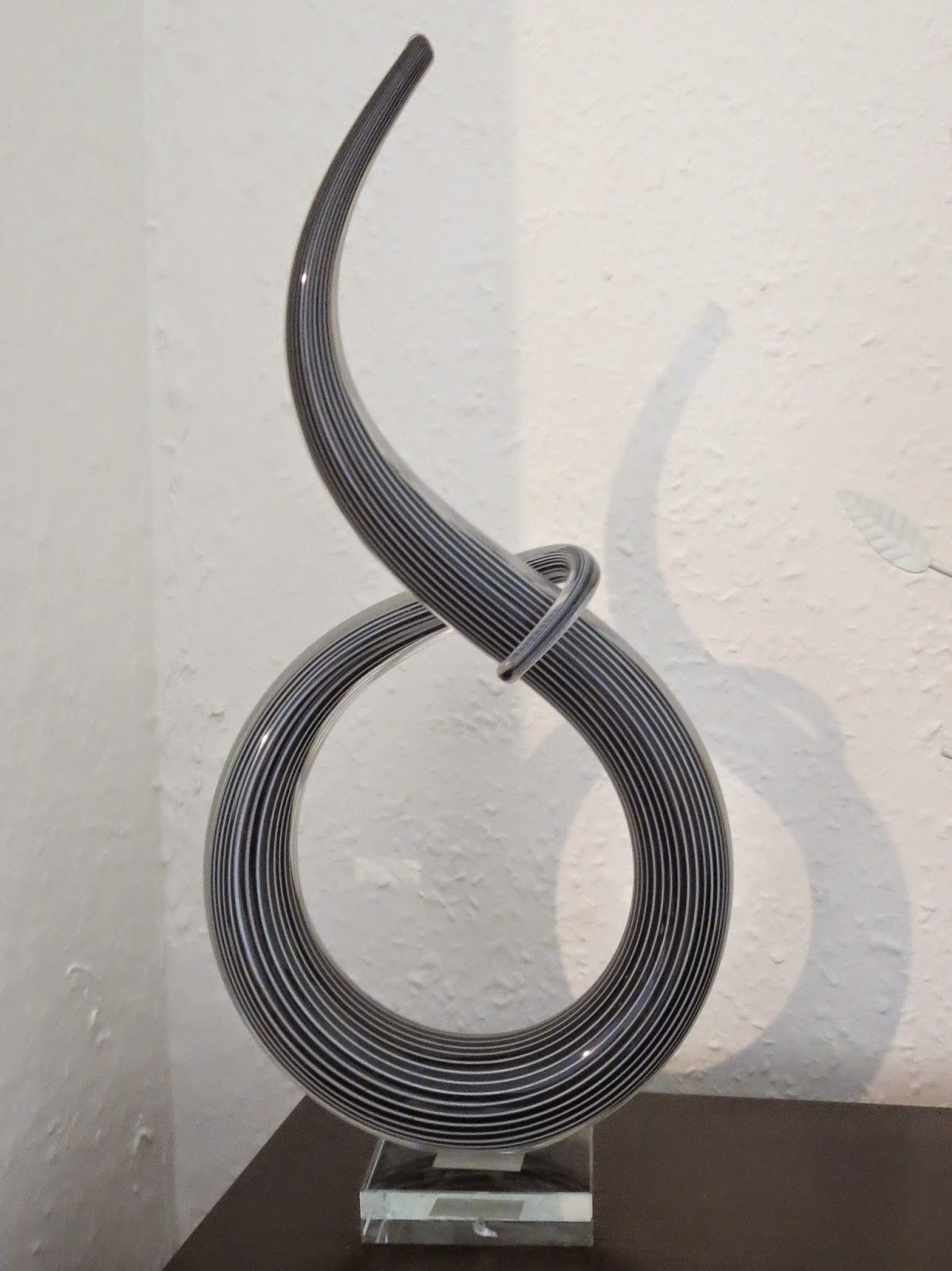
Before we left Doncaster, Albert gave Sue and me an ornament
as a leaving gift. It currently sits on
a bureau in our lounge. Whenever we look
it we will be prompted to remember Albert, a true gentleman, and a valued friend. It was a privilege to have known him. R.I.P. Albert.
Monday, 1 September 2014
More than a number
Figures were published last week which indicate that net
migration into the UK increased by more than 38% to 243,000 in 2013-14. Commentators were quick to point out the
significant margin by which the Government are likely to miss their stated
targets to reduce immigration. The reality
is that any UK Government can do little or nothing to prevent EU citizens
arriving on these shores. What this
means, of course, is that if the Government wants to reduce immigration
figures, the only way to do so is to by cutting the number of people coming to
the UK from outside the EU.
Politicians and other public figures have, in recent times,
felt the need to speak out on the immigration issue, and all sorts of numbers
are bandied about. It is vital to
realise, however, that we are not speaking about an anonymous group, or
impersonal numbers, we are speaking about individual people and families. This has been brought home to me in a
personal way in the past couple of weeks.
Rev Robert Kasema recently arrived to work as a Methodist
Minister in the Leicester West Circuit.
He brought with him his four younger children, the youngest of whom is
Hannah, aged just 3. Tragically,
Robert’s wife died shortly after giving birth to Hannah. The two older children of the family, Kenny
and Nancy, were important in helping Robert and the younger children through
this time of great sadness. Nancy has
been the person who has stood in for her mother to look after Hannah and the
rest of the family.
Because Kenny and Nancy are aged over 18, they have had to
apply for their own visas to travel to the UK.
Very sadly, the Home Office in the UK has rejected their visa
applications. This has caused great
distress to the whole family, not least because Nancy was to planning to
continue her role has carer for the younger children.
I have little doubt that when decisions was being made
about Kenny’s and Nancy’s visa applications, the officials concerned had in the
back of their mind the fact that the Government is determined to reduce
immigration figures. Any feeling of
compassion for the Kasema family, and any dose of common sense, was probably
crushed under the weight of impossible Government targets. We are not talking here about numbers, we are
talking about a real family in need.
Our hope and prayer is that the Home Office will see sense
and overturn the decision. In the meantime,
we will do what we can to support this family who have been divided by an
uncaring bureaucracy.
Subscribe to:
Posts (Atom)