Monday, 12 November 2018

Do we really remember them?


‘At the going down of the sun and in the morning, we will remember them.’  Those well-known words, from Laurence Binyon’s famous poem, “For the Fallen”, are heard repeated each November at Remembrance services and events up and down the country.  The words come easily to the tongue, but do we realise their true significance and challenge?

I have been pondering in the real meaning of the promise, ‘we will remember them.’  Of course, it does mean that we remember the sacrifice of those who gave their lives for us; we honour the memory of the countless numbers who died.  No-one is still alive who was part of World War One, but we do have names and images, together with both written and spoken accounts.  But moving as some of the Remembrance services and events have been, especially with this year being the one hundredth anniversary of the end of the Great War, is it enough to simply remember them in this way?  It seems to me that to truly remember means to ask deep questions of ourselves, to ponder seriously on the significance of their sacrifice and the example they have set for us. 

Harold Parry was a young man who was killed in action on 6 May, 1917 by a German shell at Ypres, in Flanders, at just 20 years of age.  Before the war, Parry had been a prolific writer of poetry.  In the bitter experiences of the trenches he turned again, for relief, to poetry, both reading and writing, and letters home to family and friends.  He could express himself clearly in both prose and verse, and his writings revealed what the young men who died in “the war to end all wars” thought about their experiences in that terrible conflict. 

Following his death, a book, ‘In Memoriam Harold Parry” was published.  It is a tribute to Harold Parry’s life, and includes some of his poems and letters home.  It is a moving and poignant volume.  In one of his letters, Harold Parry reflects on the significance of the war and the sacrifices made; he also ponders on the future, and whether things will really change for the better:


“I wonder if afterwards mankind will sink back into the slough from which the war has brought it; if men will occupy their lives in things purely unnecessary  and devote their brain and ability to the lust for gold; or whether from the ashes of our dead, and from the ashes of all the dead on all the battlefields, will arise a purer, better life - a life of ideals, however narrow, a life which will strive to find beauty and which, in the most unexpected and unlikely places, will discover the greatest blessing that God has given us here - love.

If so, the sacrifice will not be vain, and the future generations in their happiness and through their love will be able to pay the debt they owe to the poor fellows who have died for them and have found their rest, face upwards to the sky, far, far removed from all that life holds for them of love and peace, happiness and hope.”

I find those words to be deeply challenging.  If Harold Parry could look down on our world, our society, today, to see how we are, how we treat each other and the kind of things which we make our priorities, would he think that his sacrifice was worthwhile?  By far the most significant way in which we can ‘remember them’ is to live our lives in a way which honours their sacrifice and fulfils Harold Parry’s dream of a world where love is known.

Monday, 5 November 2018

You were made to rise and soar!


In 1990 I perhaps foolishly offered to accompany my brother-in-law in attempting the Coast to Coast Walk, a 192-mile (if you follow the directions correctly!) long-distance footpath in Northern England which traverses the country. It passes through three contrasting national parks: the Lake District National Park, the Yorkshire Dales National Park, and the North York Moors National Park.  In achieving the walk, we passed through some breath-taking scenery, but it was hard going at times!  The walk was devised by Alfred Wainwright, creator of many walking guide books, particularly around his beloved Lake District.
Wainwright was a fascinating and complex character who, when walking, preferred his own company and would often do his best to avoid contact with other walkers.  I have recently read an interesting biography of Wainwright by Hunter Davies.  It is clear that Wainwright was a something of a philosopher.  I was particularly taken by one quote from his writings:


Anticipation is often more pleasurable than realisation; recollection is the sweetest of all and most enduring.  The mentality which urges you never to anticipate, never to count your chickens before they are hatched, is wrong all to blazes.  Let your anticipation run riot, plan and dream of things far above your grasp, reach after them in your imagination even when reality is receding, think about them always.  Plan new achievements, and set about achieving them.  Failure and disappointment simply don’t matter; go ahead with your dreaming, let your enthusiasm run away with you.  You were made to rise and soar, and come down to earth with a bump, and rise and soar again.  If you accomplish nothing else, you’ll have kept the rot and rust away.  Let me warn you: it’s the practical people who stay rooted on the earth, who make the money.  But it’s the dreamers who touch the stars.  Which is the success you plan?  Are you to ‘play safe’ for the rest of your life, or are you to adventure?  You must make a choice, and make it early; and having made it, you must abide by it.


What a challenge!  Although Wainwright’s mother was a lady with a strong Christian faith, there is no indication that her son followed in her footsteps.  Yet there are significant elements of Wainwright’s words which could be very well applied to the life of following Jesus.  When Jesus calls us to follow him, he never intends us to ‘play safe’; to do so it to miss out on his purposes for us.  After all, even our biggest dreams are far less than what God can accomplish through us (‘God is able to do far more than we could ever ask for or imagine.  He does everything by his power that is working in us’ Ephesians 3.20).


You were made to rise and soar!

Wednesday, 17 October 2018

Why suffering?

Sue and I attended a conference last year at which one of the speakers was a guy called Patrick Regan.  He came across as a very engaging character, and what he had to say was extremely thought-provoking.  As a result of hearing him speak, we bought his book, 'When Faith Gets Shaken', which reflects on how we can focus on God and keep going through the tough times of life - when our faith gets shaken.  The book is not an airy-fairy theoretical book, but one which was written out of real-life issues which the author faced in his own life; it grapples with some very difficult matters relating to suffering and how we can respond as people of faith.

Subsequent to reading the book, I discovered that there was a DVD looking at the same issues.  I bought the DVD and we have recently started using the 6-session series in one of my churches.  The subject for our first session last week was, "God, where are You?"  In other words, where is God in our times of struggle and pain?  We had an interesting discussion after watching the DVD.

I have recently begun reading a book by former atheist Lee Strobel, 'The Case For Faith', in which he examines 8 common objections to Christian faith, the first of which is the issue of suffering, addressing the question as to how can a loving God exist when there is so much evil and suffering in the world? There have probably been hundreds of books written on this subject, and it is true to say that we are never going to fully understand the subject.  Nevertheless, there are some things which we can say.  I am finding Strobel's book very helpful in thinking through some key issues. 

As I have been pondering on the discussion which we had at last week's 'When Faith Gets Shaken' session and on what I have since read, into my thoughts came a memory from when our daughter Caroline was still in her very early years.  She had to undergo an operation at the local hospital.  Although it was a relatively minor operation, I remember feeling distraught as she was wheeled away on a trolley towards the operating theatre.  I felt tears come to my eyes, and I would have given anything to have taken her place if that had been possible.  Thankfully she came safely through the procedure.

A couple of thoughts come out of that experience.  Firstly, because Caroline was so young and probably didn't understand fully what was happening to her, it would have been quite understandable for her in her young mind to think that Sue and I didn't care for her as we handed her over to strangers to take her and do something to her which caused her pain.  That's because she couldn't grasp the 'big picture', that it was necessary for her to have the operation for her future health.  I am convinced that much of our problem with suffering is that we can't grasp the big picture as God sees it.  As God says through the prophet Isaiah,

'For my thoughts are not your thoughts,
    neither are your ways my ways,”
declares the Lord.

 As the heavens are higher than the earth,
    so are my ways higher than your ways
    and my thoughts than your thoughts.' 
Isaiah 55.7-9.


The second though which comes as a result of our experience many years ago with Caroline has to do with what I have already said, that I would have given anything to have changed places with her and taken the pain myself.  There is a sense, of course, in which that is what God has done for us.  He stepped into our world through his Son Jesus Christ.  Jesus became one of us, and suffered the torture and agony of the cross, taking on himself the weight of the sin of the world.  Imagine the depths of sorrow in the heart of God the Father as he witness the crucifixion of his Son.  God is not a remote and far-away God, but a God who is fully acquainted with suffering.  What's more, he promises to be with with us in whatever we experience; 'I will never never you or forsake you' (Hebrews 13.5).


The book of the Bible which most directly deals with the issue of suffering, of course, is Job.  Job was a person who suffered a great deal, and constantly questions God about what has happened to him.  Ultimately, Job was only satisfied when he came face to face with God: 'My ears had heard of you but now my eyes have seen you' (Job 42.5).  The questions about suffering will remain, but as we look fully into the face of the God who created us and loves us, we will find courage to live with the questions, and strength to trust him in  life's storms


Tuesday, 9 October 2018

Be a bucket filler

One day last week I received an image on my phone of my granddaughter Beth holding a certificate she had been awarded by her school.  Judging by the big smile on her face, she was very happy to have received it.  I was somewhat puzzled by the nature of the award, however, as the certificate was headed, "Bucket filler of the week."  A number of images went through my mind as I pondered on the meaning of this phrase.


The wording on the front of the certificate read, "This certificate is awarded to Beth for being an outstanding bucket filler this week", and underneath was written the word "kindness".

The back of the certificate gave some clarifying detail: 

Remember to fill a bucket!
We are bucket fillers when we:
show love to someone,
say or do something kind,
give someone a smile,
make others feel special,
or care for someone.
Remember ... when you fill someone's bucket, you fill your bucket, too!

The idea is that we all carry invisible buckets around with us.  If our buckets are full, we are happy and content; having an empty bucket leads to sadness.  The challenge is to fill the buckets of other people through acts of kindness, love and thoughtfulness.  And we find that as we fill the buckets of others, our own bucket is being filled.  On the other hand, if we act in an unkind way towards someone, or speak ill of a person, not only are we emptying their bucket but also our own.

What a great way to encourage children (and adults!) to consider how they treat other people.   It certainly fits in well with how we are called to live as followers of Jesus.  St. Paul, for example, tells us, 'Be kind to one another, tenderhearted, forgiving one another, as God in Christ forgave you' (Ephesians 4.32).  God has filled our buckets with his love, grace and forgiveness; how can we not seek to do our best to fill the buckets of others?


Monday, 17 September 2018

Unanswered question

One night last week I had a dream that my brother Phil was in the UK.  Although (in the dream) he was not in good health, I was pleased to be able to spend some time with him.  When it came time for him to leave the UK to head back to New Zealand where he lived, my emotions round the understanding that it would probably be the last time I saw him were hard to deal with.  Then I woke up, with the dream still vivid in my memory, and realised that my dream was a replay of a reality from back in early 2017, when Phil had last been in the UK.  We knew then that Phil was very unwell; he died from cancer a few months later.

Even though what I had just gone through was only a dream, many of the former emotions of sadness and loss resurfaced.  I have to admit that during the following day I felt very low; perhaps just as well that it was my day off.  It's rather strange how differing events and experiences can trigger a whole series of emotions and feelings, sometimes totally out of the blue.

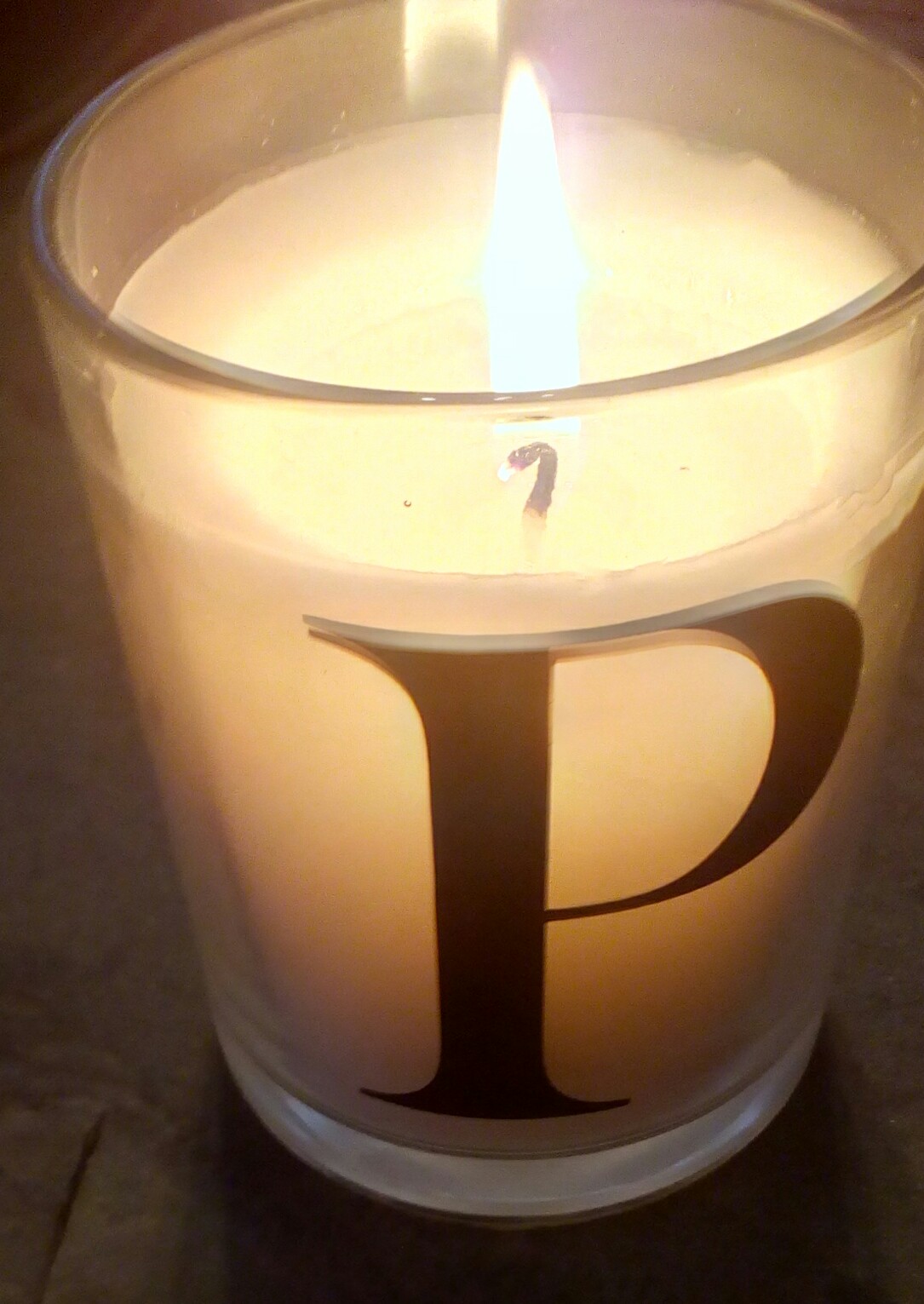
At the beginning of the month Sue and I, together with my sister Jenny and brother-in-law David, visited Newark.  One of the reasons for doing so was that we wanted to spend some time giving thanks for Phil's life and praying for his family in New Zealand, on what was the first anniversary of his death.  We went into the Parish Church in Newark (well worth a visit) and lit a candle as we prayed.  The candle was one given me by a friend not long after Phil died.  It is in a small glass jar with the letter "P" printed on one side.


As we prayed, and reflected in the silence, the candle became a focal point.  As I stared at the candle I happened to notice that the wick looked as if it was in the shape of a question mark.  I felt that was significant, as there were unanswered questions as we thought of Phil's death.

Phil was the youngest member of our family of 6 children.  He and his wife Monika were doing a great job in New Zealand through Church Army.  Phil had a great passion for reaching the nation with the love of Jesus.  The testimonies which flooded in after his death gave eloquent testimony to the enormous positive influence Phil had had on so many people.  He had a great vision for the future.  All over the world people were praying for his healing.  Though some physical healing did come, ultimately he died in his mid 50s.  A life cut short?  'Why did God allow it to happen?' is a question which many will have asked.  There seems no logical answer.

So we are left with a choice.  Do we rail against God and blame him for making a ghastly mistake?  Or do we simply leave the question unanswered and trust that God knows best?  I have chosen the latter.  I don't suppose we will ever get a complete answer to some of the questions on our hearts and minds, but we need to take heed of God's words through the prophet Isaiah:

For my thoughts are not your thoughts,
    neither are your ways my ways,”
declares the Lord.

“As the heavens are higher than the earth,
    so are my ways higher than your ways
    and my thoughts than your thoughts.     
Isaiah 55.8&9.


Lord God, though I don't understand everything that happens, I choose to put my trust in you.  Though our loss still hurts greatly, I thank you that you draw close to comfort the sorrowful.  Thank you that all those who trust in your Son have the assurance of life eternal in your presence.